Bringing a new baby into the world changes your life in countless ways, including your hair. Many women are surprised when they begin noticing extra strands in the shower, on their pillow, or tangled in their hairbrush a few months after giving birth. While it can feel alarming, postpartum hair loss is one of the most common changes new mothers experience.
The good news is that postpartum hair shedding is usually temporary. In most cases, your hair follicles remain healthy, and your hair gradually returns to its normal growth cycle over time. Understanding why it happens, how long it lasts, and what dermatologists recommend can help you care for your hair with confidence during recovery.
In this guide, we’ll explain the science behind postpartum hair loss, share dermatologist-approved hair care tips, discuss what actually helps, and offer practical styling advice from the salon experts at Community Style House.
Quick Answer: What Is Postpartum Hair Loss?
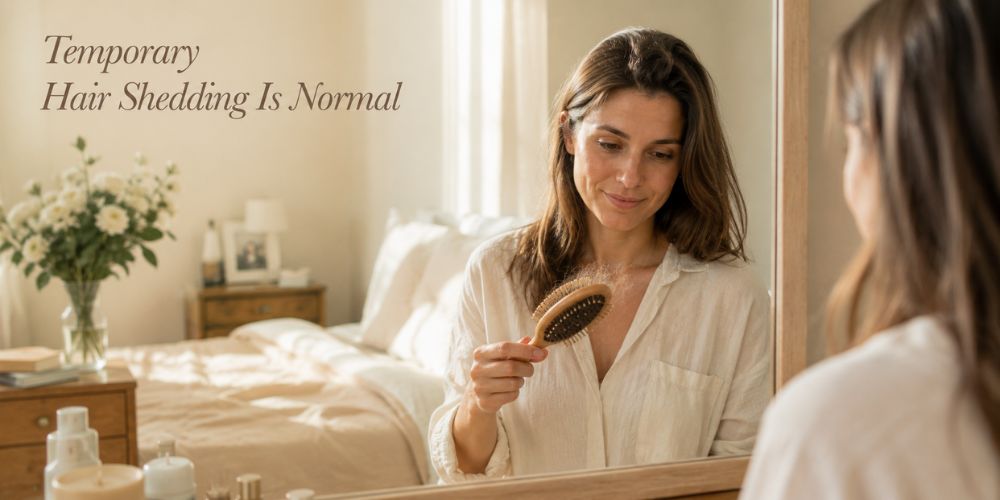
Postpartum hair loss, also known as postpartum telogen effluvium, is temporary excessive hair shedding that typically begins two to four months after childbirth, often peaks around four months, and gradually improves within six to twelve months. It happens because estrogen levels drop after pregnancy, causing many hairs that remained in the growth phase during pregnancy to enter the shedding phase at the same time. Most women recover naturally without medical treatment, although gentle hair care and dermatologist-approved habits can help minimize breakage while hair regains its fullness.
According to the American Academy of Dermatology (AAD), postpartum hair shedding is a temporary condition that usually resolves as the hair growth cycle returns to normal.
What Is Postpartum Hair Loss?
Postpartum hair loss is a temporary increase in hair shedding that occurs after pregnancy. Despite its name, it is not true hair loss because the hair follicles are not permanently damaged. Instead, it’s a natural response to hormonal changes that occur after childbirth.
Dermatologists refer to this condition as telogen effluvium, a type of temporary hair shedding that happens when a larger-than-normal number of hairs enter the resting (telogen) phase of the hair growth cycle simultaneously.
Under normal circumstances, it’s perfectly healthy to shed around 50 to 100 hairs each day. During postpartum telogen effluvium, however, that number can increase noticeably for several weeks or months. As a result, many new moms notice:
- More hair collecting in the shower drain
- Increased shedding while brushing or styling
- Hair on pillows or clothing
- Reduced ponytail thickness
- Thinner hair around the temples or hairline
Although seeing these changes can be upsetting, they are usually a sign that your hair growth cycle is returning to its normal rhythm rather than a sign of permanent hair loss.
Why Does Hair Fall Out After Pregnancy?
One of the biggest misconceptions about postpartum hair loss is that pregnancy causes hair to fall out. In reality, pregnancy often causes less hair shedding than usual.
During Pregnancy
Higher estrogen levels keep more hair follicles in the active growth phase (anagen). Instead of following their normal growth cycle, many hairs remain attached to the scalp for longer than usual. This is why many women notice thicker, shinier, and fuller hair during pregnancy.
After Childbirth
After delivery, estrogen levels gradually return to their pre-pregnancy levels. As hormone levels normalize, many of the hairs that stayed in the growth phase during pregnancy transition into the resting phase together.
Around two to four months later, those hairs begin shedding at approximately the same time, creating the appearance of sudden hair loss.
Johns Hopkins Medicine explains that this hormonal shift is a normal part of the postpartum recovery process and, for most women, the hair growth cycle gradually returns to normal.
This temporary shedding is completely different from conditions that permanently damage hair follicles, such as certain types of alopecia.
Other Factors That May Contribute
While hormonal changes are the primary cause, other factors can influence how noticeable postpartum shedding becomes, including:
- Physical stress associated with childbirth
- Sleep deprivation during the newborn stage
- Iron deficiency or other nutritional deficiencies
- Thyroid disorders that develop after pregnancy
- Emotional stress
- Genetics and individual hair density
If an underlying medical condition is present, hair shedding may last longer than expected, which is why persistent or severe hair loss should always be evaluated by a dermatologist.
Postpartum Hair Loss Timeline: When Does It Start, Peak, and Stop?
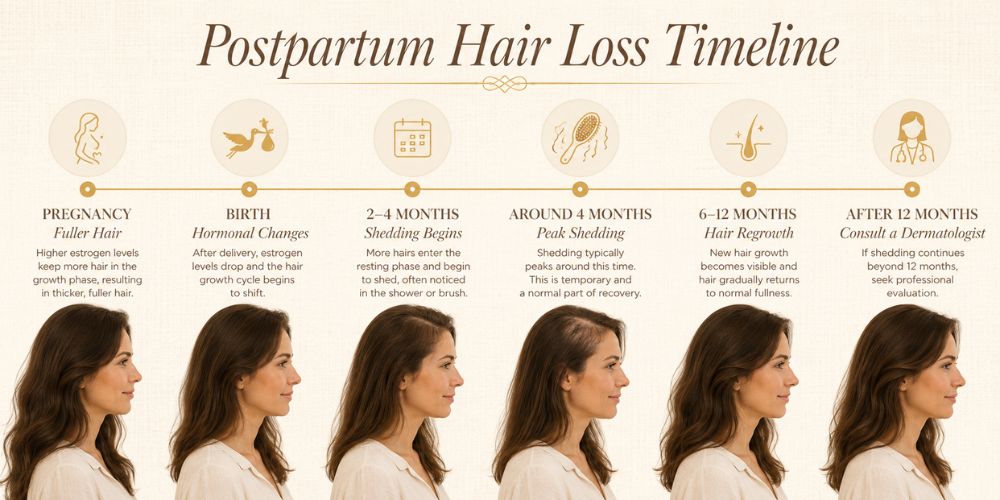
Understanding the timeline can make postpartum shedding much less frightening.
During Pregnancy
Hair often appears thicker because fewer hairs enter the shedding phase.
Two to Four Months After Birth
This is when most women first notice increased shedding. Hair may seem to come out in larger amounts during washing or brushing.
Around Four Months
For many women, shedding reaches its peak around four months postpartum. This is often the stage when hair feels noticeably thinner, especially around the temples, crown, or hairline.
Six to Twelve Months
Hormone levels stabilize, new hair growth becomes more noticeable, and the hair growth cycle gradually returns to normal. Many women regain much of their previous fullness during this period.
Beyond One Year
If excessive shedding continues beyond twelve months, or if you develop bald patches, scalp irritation, or sudden severe thinning, it’s time to schedule an evaluation with a dermatologist.
Recovery Timeline at a Glance
| Stage | What Typically Happens |
| Pregnancy | Hair appears fuller and thicker |
| Birth | Hormone levels begin changing |
| 2–4 months | Shedding begins |
| Around 4 months | Peak shedding |
| 6–12 months | Gradual regrowth and recovery |
| After 12 months | Seek medical evaluation if shedding persists |
Dermatologist-Approved Tips for Managing Postpartum Hair Loss
Although there is no way to instantly stop postpartum hair shedding, dermatologists agree that gentle hair care can help protect fragile strands while your hair naturally recovers.
1. Wash Your Hair Gently
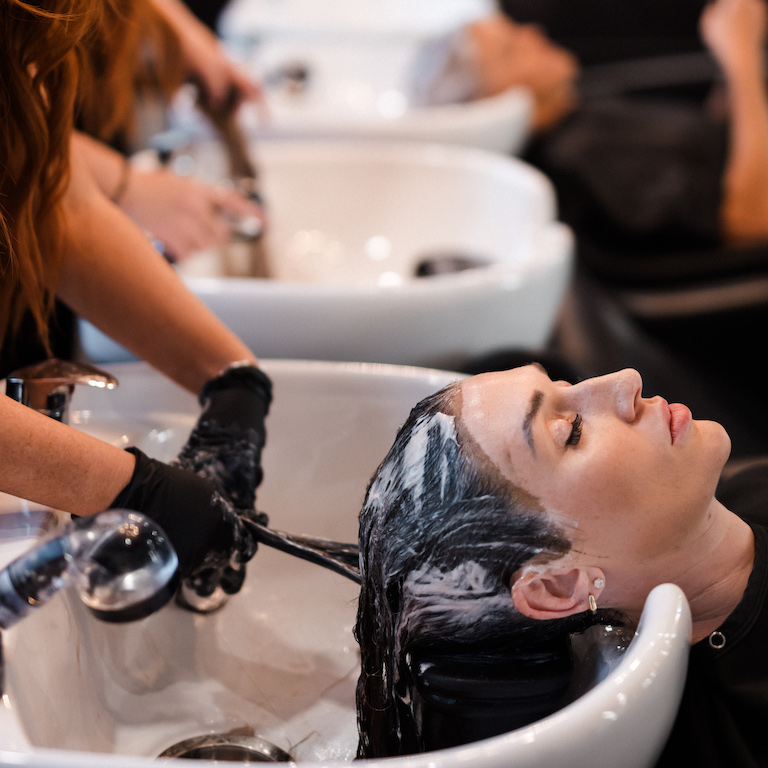
Many women worry that shampooing causes more hair to fall out. In reality, washing doesn’t cause postpartum hair loss—it simply releases hairs that were already ready to shed.
Instead of avoiding washing altogether:
- Use lukewarm water rather than very hot water.
- Massage your scalp gently using your fingertips instead of your nails.
- Avoid vigorous scrubbing.
- Pat hair dry with a microfiber towel instead of rubbing it aggressively.
Gentle cleansing helps maintain a healthy scalp while reducing unnecessary breakage.
2. Choose Lightweight Volumizing Products
While shampoos cannot stop postpartum shedding, the right products can make hair look noticeably fuller.
Dermatologists often recommend:
- Lightweight volumizing shampoos
- Conditioners formulated for fine hair
- Protein-rich formulas that temporarily add body to each strand
Avoid products that leave heavy residue, as they can flatten fine hair and make thinning more noticeable.
Rather than applying conditioner from roots to ends, concentrate it on the mid-lengths and ends to help maintain volume at the scalp.
Choosing professional-quality hair care products can also help reduce unnecessary breakage while adding lightweight volume.
3. Minimize Heat Styling
Hair affected by postpartum shedding is often more fragile than usual.
Whenever possible:
- Let your hair air dry partially before blow-drying.
- Use the lowest effective heat setting.
- Always apply a heat protectant.
- Reduce frequent use of flat irons and curling irons.
Heat doesn’t cause postpartum hair loss, but it can contribute to breakage, making hair appear even thinner.
Professional styling services techniques can also create lift and movement without relying on excessive teasing or damaging heat.
4. Avoid Tight Hairstyles
High ponytails, tight buns, braids, and slicked-back styles place unnecessary tension on already fragile strands.
Instead, choose:
- Loose ponytails
- Soft braids
- Low buns
- Claw clips
- Silk scrunchies
These styles reduce tension while still keeping hair comfortably out of your face during busy days with a newborn.
5. Nourish Hair From Within
Healthy hair starts with overall nutrition.
Aim to include foods rich in:
- Protein
- Iron
- Zinc
- Vitamin D
- Omega-3 fatty acids
If you’re breastfeeding or have concerns about nutritional deficiencies, speak with your healthcare provider before starting supplements. Routine biotin supplementation isn’t recommended unless a deficiency has been identified.
As your hair begins to recover, many women start looking for temporary ways to add fullness without compromising fragile strands. If you’re exploring that option, once active shedding slows, some women choose hair extensions for fine or thinning hair to restore volume while maintaining a natural appearance.
Best Shampoo for Postpartum Hair Loss: What Dermatologists Recommend
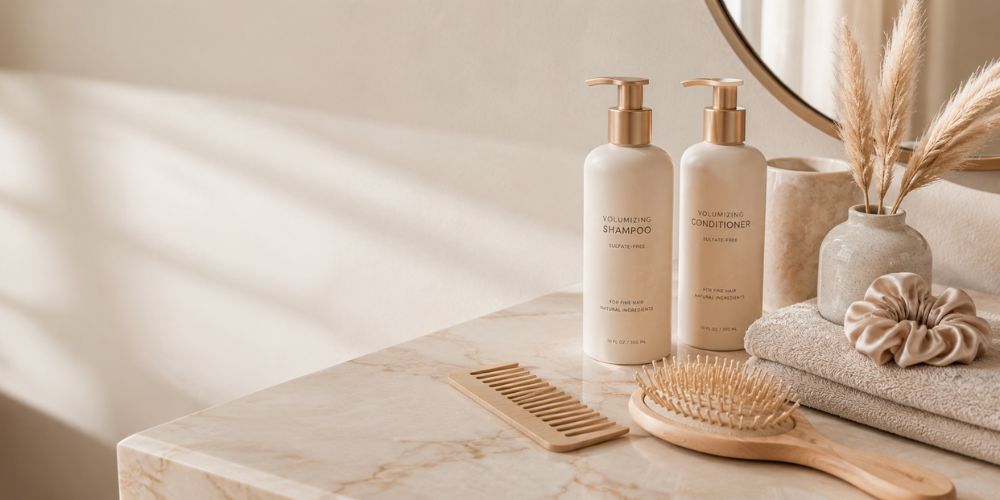
One of the most common questions new moms ask is, “What’s the best shampoo for postpartum hair loss?” The truth is that no shampoo can stop the hormonal shedding caused by postpartum telogen effluvium. However, the right formula can help your hair look fuller, reduce breakage, and support a healthy scalp while your hair naturally recovers.
Look for These Features
Choose shampoos that are:
- Lightweight and volumizing
- Designed for fine or thinning hair
- Free from heavy waxes that flatten the hair
- Gentle enough for regular use
- Paired with a lightweight conditioner
Many volumizing shampoos contain ingredients that temporarily coat the hair shaft, making individual strands appear thicker without weighing them down.
Avoid
- Heavy conditioning shampoos
- Thick silicone-heavy formulas that leave buildup
- Products that promise unrealistic overnight regrowth
- Harsh cleansers if your scalp feels dry or sensitive
Rather than chasing miracle products, focus on a consistent hair care routine. Healthy hair habits often have a greater long-term impact than switching shampoos every few weeks.
What Actually Helps (And What Doesn’t)
The internet is full of advice about postpartum hair loss, but not all of it is supported by evidence. Understanding what can realistically help prevents unnecessary frustration and expense.
What Helps
✔ Gentle daily hair care
✔ A balanced diet with adequate protein, iron, zinc, and vitamin D
✔ Managing scalp health
✔ Reducing heat and chemical damage
✔ Regular trims to remove split ends
✔ Patience while the normal hair cycle resumes
What Doesn’t Have Strong Evidence
- Cutting your hair to make it grow faster
- Hair oils reversing hormonal shedding
- Biotin supplements unless a deficiency is confirmed
- Expensive miracle serums claiming instant regrowth
- Washing your hair less often
Instead of trying to stop the shedding completely, focus on protecting the healthy hair you have while new growth gradually appears.
How to Hide Postpartum Hair Loss
One of the biggest emotional challenges of postpartum hair loss isn’t the shedding itself—it’s how it affects confidence. Fortunately, a few simple styling adjustments can make thinning areas much less noticeable.
Change Your Part
If your scalp is becoming more visible, switching from a center part to a soft side part can instantly create the appearance of greater volume.
Add Gentle Root Lift
A lightweight volumizing mousse or root-lifting spray can help create fullness around the crown without making hair stiff or sticky.
Blow Dry for Volume
Using a round brush while blow-drying can lift the roots and make hair appear thicker. Keep the heat on a moderate setting and always use a heat protectant.
A properly executed blow dry can lift the roots and create the illusion of noticeably thicker hair without putting unnecessary stress on fragile strands.
Choose Texture Over Sleek Styles
Loose waves often reflect light differently than straight hair, helping create the illusion of fuller density.
Camouflage Wider Partings
Powder-based root touch-up products or hair fibers may temporarily reduce the appearance of scalp show-through until new growth fills in naturally.
Best Hairstyles for Thinning Postpartum Hair
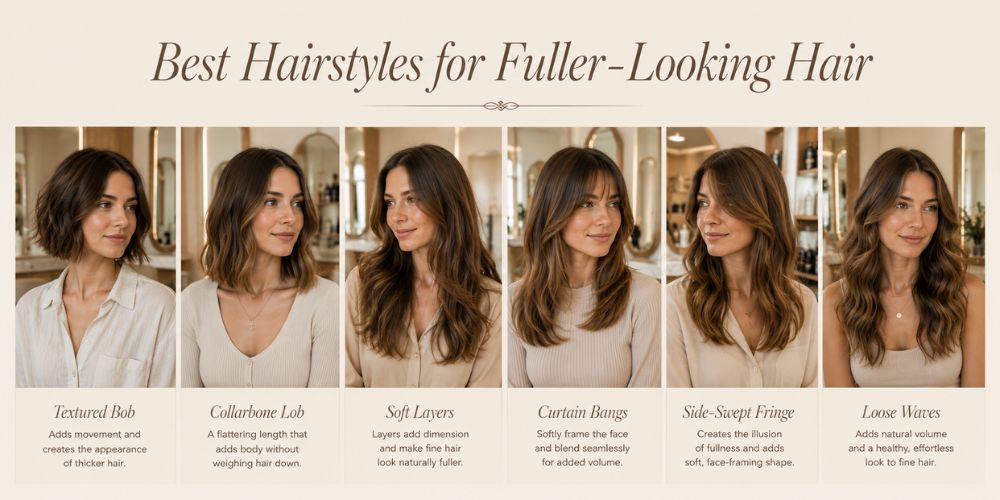
The right haircut won’t stop postpartum hair shedding, but it can dramatically improve the appearance of fullness while making daily styling easier.
Many new moms also appreciate lower-maintenance styles during the busy months after childbirth.
Some of the most flattering options include:
Textured Bob
A chin-length or jaw-length textured bob creates natural movement and makes fine hair appear denser.
Collarbone Lob
A long bob offers versatility while maintaining enough length for ponytails and soft waves.
Soft Layers
Subtle layering adds movement without removing too much weight from already fine hair.
Curtain Bangs
Curtain bangs help soften the hairline and can disguise temporary thinning around the temples.
Side-Swept Fringe
A side fringe creates visual fullness while drawing attention away from sparse areas.
Loose Waves
Soft waves create dimension and body, making hair appear naturally thicker than sleek straight styles.
While no single haircut can stop postpartum hair shedding, choosing a style that complements your face shape, hair texture, and lifestyle can make a noticeable difference in how full your hair looks. Many of today’s trending hairstyles for women focus on adding movement, texture, and dimension, making them ideal for creating the appearance of naturally thicker hair.
Styling Mistakes That Can Make Hair Look Thinner
Sometimes it’s not the shedding itself that makes hair appear thinner—it’s the way it’s being styled.
Avoid these common mistakes:
- Tight ponytails or buns
- Excessive teasing
- Frequent bleaching
- Overusing dry shampoo
- Brushing aggressively when hair is wet
- Heavy oils that flatten fine hair
- Constantly touching or pulling at the hair
Making a few small adjustments can reduce breakage and help preserve volume while your hair recovers.
Hair Toppers for Postpartum Shedding
If postpartum thinning is affecting your confidence, hair toppers may offer a temporary cosmetic solution while your natural hair regrows.
Unlike full wigs, toppers are designed to blend with your existing hair and provide extra coverage where thinning is most noticeable, particularly around the crown or part line.
Benefits include:
- Instant volume
- Natural-looking coverage
- Lightweight wear
- Temporary solution during recovery
A professional consultation can help determine whether a topper is appropriate for your hair type and lifestyle.
Can You Get Hair Extensions After Postpartum Hair Loss?
Many women wonder whether hair extensions can restore volume during postpartum recovery.
The answer depends on where you are in your recovery timeline.
If you’re still actively shedding significant amounts of hair, it’s usually best to wait. Adding extra weight to fragile strands may increase stress on the hair if extensions are applied too early.
However, once shedding has slowed and new growth has begun, some women may be good candidates for lightweight extension methods following a professional consultation.
At Community Style House, every recommendation begins with an assessment of your hair’s health, density, and recovery stage. The goal is always to protect your natural hair first while helping you achieve beautiful, confidence-boosting results.
Understanding the differences between K-tip hair extensions and other extension methods makes it easier to choose an option that matches your hair density, lifestyle, and maintenance preferences.
When Should You See a Dermatologist?
Although postpartum hair loss is usually temporary, there are situations where professional evaluation is important.
Schedule an appointment if:
- Shedding continues beyond 12 months postpartum.
- You notice completely bald patches.
- Your scalp becomes painful, inflamed, or intensely itchy.
- Hair loss begins suddenly or is unusually severe.
- You experience symptoms such as fatigue, unexplained weight changes, or cold intolerance, which could suggest thyroid disease.
- You’re concerned that nutritional deficiencies may be contributing to prolonged shedding.
A dermatologist can determine whether you’re experiencing normal postpartum telogen effluvium or another type of hair loss that requires treatment.
Moving Forward with Confidence
Postpartum hair loss can be an emotional experience, but it is also one of the most common and temporary changes that occur after pregnancy. Understanding why it happens—and knowing what truly helps—can make the recovery process far less stressful.
Rather than chasing quick fixes, focus on supporting healthy hair with gentle care, balanced nutrition, and realistic expectations. Most importantly, remember that recovery takes time. As your hormones stabilize, new hair growth gradually replaces the strands you’ve shed.
At Community Style House, we understand that healthy hair is closely connected to confidence. Whether you’re looking for a haircut that creates the appearance of fuller hair, professional styling advice, or guidance on when hair extensions may become appropriate after recovery, our team is here to provide personalized recommendations based on your unique hair goals.
Frequently Asked Questions
Is postpartum hair loss permanent?
No. In most cases, postpartum hair loss is temporary, and normal hair growth gradually returns within six to twelve months.
When does postpartum hair loss start?
Most women begin noticing increased shedding about two to four months after giving birth.
When does postpartum hair loss stop?
Recovery varies, but many women see significant improvement between six and twelve months postpartum.
Can postpartum hair loss be prevented?
The hormonal shedding itself cannot usually be prevented, but gentle hair care, good nutrition, and minimizing breakage can help protect your hair during recovery.
What causes postpartum hair loss?
The primary cause is the drop in estrogen levels after pregnancy, which causes many hairs to enter the shedding phase simultaneously.
Should I take biotin for postpartum hair loss?
Biotin supplements are generally recommended only if a deficiency has been confirmed. Speak with your healthcare provider before starting any supplement.
Can I color my hair during postpartum shedding?
Many women can safely color their hair, but if your hair feels especially fragile, consider discussing timing and gentle coloring techniques with your stylist.
Is it normal to lose hair in clumps after pregnancy?
Yes. While it can feel alarming, seeing larger amounts of hair during washing or brushing is common during postpartum telogen effluvium. If you’re concerned about the amount of shedding or notice bald patches, consult a dermatologist.