
Thin or fine hair can make achieving volume, fullness, and length feel like an ongoing challenge. Whether you’re dealing with naturally delicate strands, age-related thinning, postpartum shedding, hormonal changes, or visible scalp around the crown, finding a solution that enhances your hair without causing damage is often the biggest concern.
One of the most common questions people ask is
Can you get hair extensions with thin hair?
The answer is yes. In fact, many of the most successful extension transformations happen on fine or thinning hair. The key is choosing lightweight extension methods, proper placement, and an experienced stylist who understands how to protect fragile strands.
Modern hair extensions are designed to be more comfortable, natural-looking, and scalp-friendly than ever before. When selected and installed correctly, they can add volume, density, and confidence while preserving the health of your natural hair.
Quick Answer: What Are the Best Hair Extensions for Thin Hair?
The best hair extensions for thin hair are:
- Tape-in hair extensions
- K-tip hair extensions (when suitable)
- Hair toppers for crown thinning
- Lightweight professionally customized extension placements
These methods distribute weight more evenly, reduce tension on individual strands, and create natural-looking fullness without placing unnecessary stress on the scalp.
For long-term wear, tape-in extensions and professionally installed K-tip extensions are among the most effective options for suitable candidates. The right choice always depends on your hair density, scalp health, and a professional consultation.
Understanding Fine Hair vs. Thin Hair
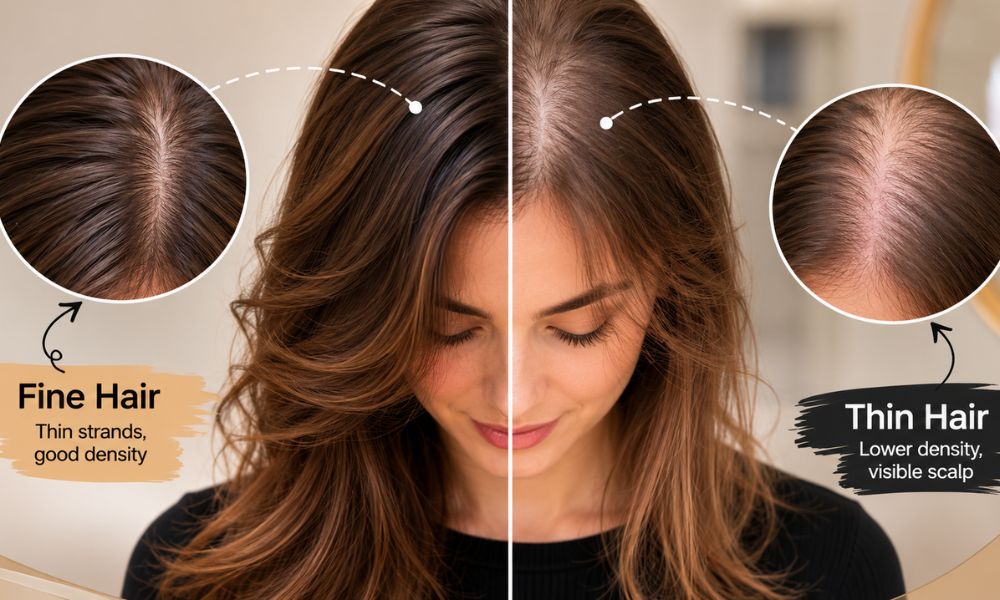
Before choosing extensions, it’s important to understand the difference between fine hair and thin hair.
Fine Hair
Fine hair refers to the diameter of each individual strand. The strands themselves are smaller and more delicate than medium or coarse hair.
Thin Hair
Thin hair refers to density. It means there are fewer strands growing on the scalp overall.
Some people have fine hair with plenty of density, while others experience both fine and thinning hair.
Knowing the difference helps determine which extension methods will blend most naturally and provide the safest long-term results.
Why Thin Hair Needs a Different Extension Strategy
Thin hair requires a customized approach because it has less structural support than medium or thick hair.
Heavy extensions can create problems such as:
- Breakage
- Excessive tension
- Scalp discomfort
- Visible attachment points
- Traction-related hair loss
The goal is not simply adding more hair.
The goal is to create natural-looking density while protecting the integrity of your existing strands.
What Causes Hair Thinning?
Hair thinning can happen for many reasons, and identifying the cause often helps determine the best solution.
Genetics
Hereditary hair thinning commonly appears as gradual density loss around the crown and part line.
Hormonal Changes
Pregnancy, menopause, thyroid disorders, and postpartum recovery can all affect hair growth cycles.
Women experiencing postpartum shedding often notice significant volume loss several months after childbirth.
For a deeper understanding of this process, see: postpartum hair loss and volume restoration
Stress
Physical and emotional stress can trigger temporary shedding known as telogen effluvium.
Nutritional Deficiencies
Low iron, vitamin deficiencies, and inadequate protein intake may contribute to hair thinning.
Chemical and Heat Damage
Frequent bleaching, coloring, and heat styling can weaken hair and create the appearance of thinning.
According to research published by the National Library of Medicine, female hair loss becomes increasingly common with age and affects millions of women worldwide.
Best Hair Extensions for Thin Hair
Not all extension methods are suitable for fine or thinning hair.
The following options are widely considered among the safest and most effective.
1. Tape-In Hair Extensions
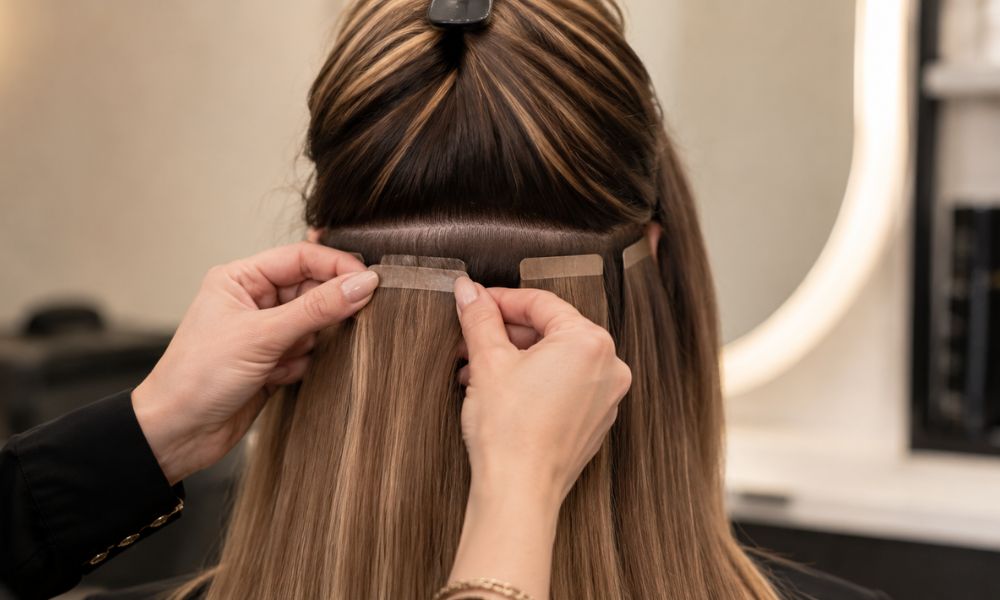
Tape-in extensions are often considered the best hair extensions for thin hair because they distribute weight across a wider section of natural hair.
Unlike single-bond methods, tape-ins reduce strain on individual strands while creating a seamless appearance.
Benefits include:
- Lightweight construction
- Flat attachment points
- Comfortable wear
- Natural movement
- No heat required during installation
- Reusable with maintenance appointments
Thin hair and tape-in extensions often work exceptionally well together because the attachment remains discreet when properly placed.
Additional information about this method can be found here in tape-in hair extensions in Scottsdale
2. K-Tip Hair Extensions
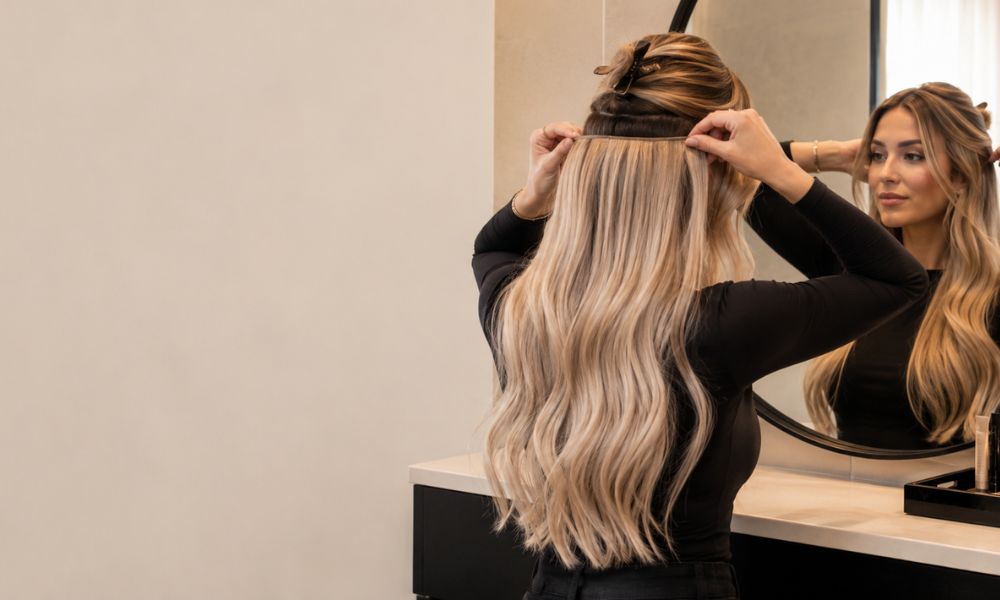
K-tip hair extensions can also be an excellent option for thin or fine hair when applied by an experienced extension specialist. Unlike heavier extension methods, properly installed K-tip extensions use small, discreet keratin bonds that blend naturally and allow the hair to move freely.
They are not suitable for everyone, which is why a professional consultation is essential before installation.
Benefits include:
- Natural-looking movement
- Individual strand placement for customized density
- Long-lasting results with proper maintenance
- Lightweight feel when correctly installed
- Excellent blending for fine hair
When placed strategically, K-tip extensions can create beautiful volume without making thin hair appear bulky or unnatural.
3. Hair Toppers for Crown Thinning
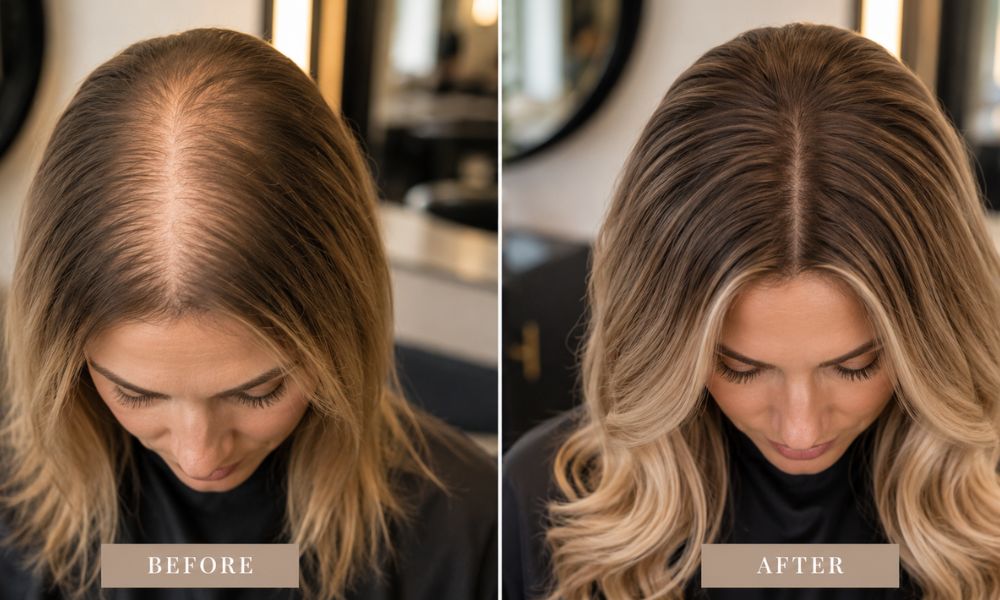
Hair toppers are specifically designed for people experiencing thinning around the crown or part line.
Rather than adding length throughout the entire head, toppers focus on areas where density loss is most visible.
Hair toppers can:
- Reduce scalp visibility
- Improve crown coverage
- Add density around the part
- Create fuller-looking hair
For many individuals, toppers provide a more effective solution than traditional extensions when thinning is concentrated on top.
Best Hair Extensions for Fine Hair
Clients searching for the best hair extensions for fine hair often focus solely on extension type.
However, the amount of hair used is equally important.
The most natural results typically come from:
- Lightweight wefts
- Strategic placement
- Conservative volume additions
- Professional color matching
A detailed breakdown of extension options designed specifically for fine hair is available here hair extensions for fine hair. The objective is creating natural density and movement rather than overwhelming delicate strands with excessive weight.
Which Hair Extensions Are Least Damaging?
One of the most frequently searched questions is:
“What are the least damaging hair extensions?”
For most people with fine or thinning hair, the least damaging options include:
- Professionally installed tape-in extensions
- Lightweight K-tip extensions (for suitable candidates)
- Hair toppers
- Customized extension placement based on hair density
These methods generally distribute weight more effectively and minimize tension on individual strands.
It’s important to remember that even the safest extension method depends heavily on proper installation and maintenance.
Can Hair Extensions Cause Hair Loss?
Hair extensions themselves do not automatically cause hair loss.
However, improper installation or excessive tension can contribute to traction alopecia over time.
Risk factors include:
- Extensions that are too heavy
- Incorrect placement
- Delayed maintenance appointments
- Constant tension on the same follicles
- Wearing unsuitable methods for your hair type
According to the American Academy of Dermatology, traction-related hair loss is often preventable when tension is minimized and hairstyles are adjusted appropriately.
For most people, professionally installed lightweight extensions pose far less risk than commonly believed.
Hair Extensions for Thinning Hair on Top
Many people searching for hair extensions for thinning hair on top, thinning hair on crown hair extensions, or extensions for thinning crown are concerned about visible scalp and a widening part line.
One of the biggest misconceptions is that extensions should be attached directly to thinning areas.
In reality, experienced extension specialists typically avoid placing extensions directly on fragile crown sections.
Instead, they focus on:
- Adding density beneath thinning areas
- Creating fullness around the crown
- Strategically blending surrounding hair
- Improving overall volume distribution
- Reducing scalp visibility
This approach creates the appearance of fuller hair without placing additional tension on vulnerable areas.
For individuals experiencing significant crown thinning, hair toppers may provide better coverage than traditional extensions alone.
Hair Extensions for Alopecia and Hair Loss
Many people experiencing hair loss wonder whether extensions are still an option.
The answer depends on the cause, severity, and stability of the condition.
For individuals with alopecia, active shedding, or medically related hair loss, extensions should only be considered after consultation with a qualified hair professional and healthcare provider.
According to the National Alopecia Areata Foundation, Alopecia can affect people in different ways, making personalized solutions essential.
When active shedding is present, alternatives may include:
- Hair toppers
- Hair integration systems
- Wigs
- Crown volumizers
Once shedding stabilizes, lightweight tape-ins and carefully placed extensions may become appropriate options depending on hair density and scalp condition.
Tape-In Extensions vs Weaves for Thin Hair
Many people compare tape-in extensions and weaves when searching for the best extensions for thin hair.
The reality is that these methods serve very different hair types.
Tape-In Extensions
Tape-ins:
- Lay flat against the scalp
- Distribute weight evenly
- Blend naturally
- Work well for fine hair
- Require minimal bulk
Sew-In Weaves
Traditional weaves:
- Require braided foundations
- Create more tension
- Add significant weight
- Are generally better suited for dense hair types
- Can place excessive strain on thin hair
For most individuals with fine or thinning hair, tape-ins are usually a safer and more natural-looking option than traditional sew-in weaves.
Permanent Hair Extensions for Thin Hair
Many people search for permanent hair extensions for thin hair.
While no extension method is truly permanent, some options provide long-term wear between maintenance appointments.
The most popular long-wear solutions include:
Tape-In Extensions
Typically maintained every 6 to 8 weeks.
K-Tip Extensions
Keratin-tip extensions can provide long-lasting results but are not always ideal for extremely fine hair.
The suitability depends on:
- Hair density
- Strand strength
- Scalp health
- Lifestyle
For a comparison of K-tip extensions and other methods, see:
K-tip extensions vs other extension methods
Additional information about this method is available here:
K-tip hair extensions in Scottsdale
What Hair Extensions Should You Avoid?
Not every extension method is appropriate for thin hair.
Methods that often require extra caution include:
Heavy Sew-In Weaves
Heavy braided foundations can place excessive tension on delicate strands.
Oversized Extension Sets
More hair does not always create better results.
Excessive weight can increase stress on fragile roots.
Poorly Installed Bonded Extensions
Single-bond methods may concentrate weight on small sections of natural hair.
Low-Quality Extensions
Cheap synthetic hair often tangles, appears unnatural, and creates unnecessary maintenance challenges.
Choosing high-quality human hair and working with an experienced extension specialist significantly improves both appearance and long-term hair health.
Before and After Hair Extensions for Thin Hair
One reason searches such as “hair extensions for thin hair before and after” and “fine thin hair extensions before and after” continue to grow is because the transformation can be dramatic.
When properly installed, extensions can help create:
- Fuller-looking hair
- Improved volume
- Better shape and movement
- Increased styling versatility
- Greater confidence
The best transformations are not necessarily the longest.
Often, the most natural results come from strategically adding density rather than excessive length.
How to Protect Thin Hair While Wearing Extensions
Healthy maintenance habits play a major role in preserving both your extensions and natural hair.
Brush Carefully
Use an extension-safe brush and begin detangling from the ends upward.
Avoid Sleeping on Wet Hair
Wet hair is more vulnerable to tangling and breakage.
Use Professional Hair Care Products
High-quality sulfate-free products help preserve both extension hair and natural strands.
Schedule Maintenance Appointments
Delaying maintenance can increase tension and create unnecessary stress on attachment points.
Minimize Excessive Heat
Heat styling should always be paired with thermal protection products.
Be Honest During Consultations
Discuss previous hair loss, scalp sensitivity, and thinning concerns with your stylist before installation.
Same-Day Hair Extension Transformations
Many clients are surprised by how quickly extensions can transform the appearance of thin hair.
Depending on the method selected, significant volume and fullness can often be achieved in a single appointment.
An overview of the process can be found here: same-day hair extension transformation process
Fuller Hair, Greater Confidence
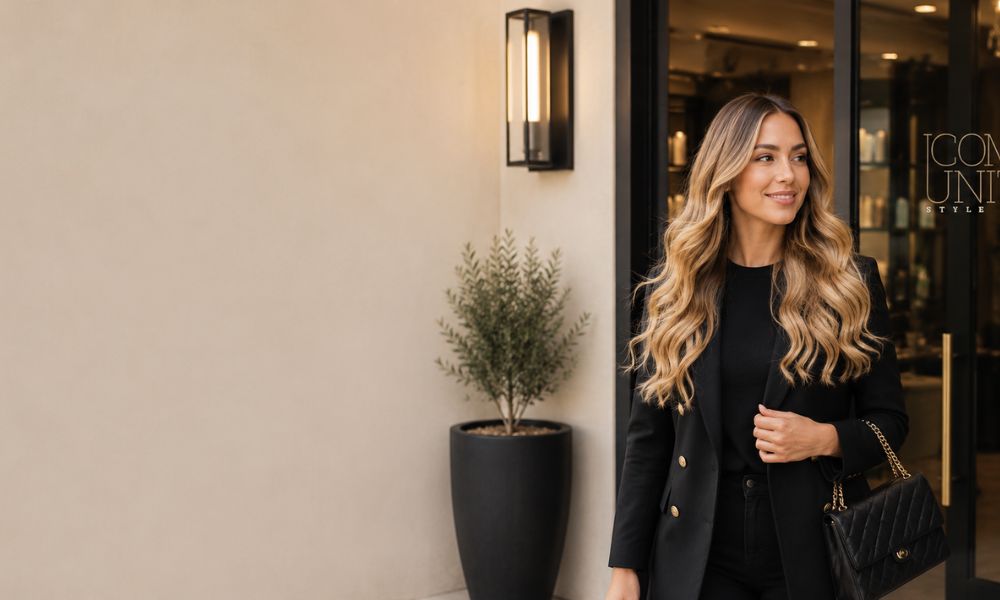
Thin or fine hair does not have to limit your confidence or styling options. With the right extension method, it’s possible to add natural-looking volume, density, and length while protecting the health of your hair.
Whether you’re considering tape-in extensions, K-tip extensions, or solutions for crown thinning, the best results come from a personalized approach tailored to your hair’s unique needs.
At Community Style House, every extension service is designed to create beautiful, seamless results that enhance your natural hair and help you feel confident every day. When chosen and applied correctly, hair extensions can do more than transform your look. They can transform how you feel about your hair.
Frequently Asked Questions
What are the best hair extensions for thin hair?
The best hair extensions for thin hair are generally tape-in extensions, professionally installed K-tip extensions for suitable candidates, and hair toppers for crown thinning. The ideal option depends on your hair density, scalp health, and lifestyle.
Are tape-in extensions good for thin hair?
Yes. Tape-in extensions are often considered one of the safest long-term options for fine and thinning hair because they distribute weight across a wider section of natural hair.
Can hair extensions cause baldness?
Hair extensions do not automatically cause baldness. Problems usually occur when extensions are too heavy, installed incorrectly, or worn without proper maintenance.
What are the least damaging hair extensions for fine hair?
Professionally installed tape-in extensions, lightweight K-tip extensions for suitable candidates, and hair toppers are among the safest choices when customized to your natural hair.
Can extensions help thinning hair look thicker?
Yes. While extensions do not regrow hair, they can significantly improve the appearance of density, fullness, and volume.
Are extensions suitable for alopecia?
Some individuals with alopecia may benefit from extensions, toppers, or hair integration systems. The best solution depends on the type and severity of hair loss.
How long should thin hair be before getting extensions?
Most extension methods require at least 3 to 4 inches of natural hair for proper blending. The exact requirement depends on the chosen method and overall hair density.